


Peel and Stick Floor Tiles Up Close: Thickness, Texture and Surface
|
|
Time to read 5 min


|
|
Time to read 5 min
You walk across your floor dozens of times per day, but little do you worry about the scratches, faded color, and dull spots that make it look older than it really is. Even if you do want to give it a fresh look, just thinking about the effort, the mess, and the costs keeps you stuck with the same old floor.
But what if you didn't have to change the whole room? Yes, today's Yipscazo Peel and Stick Floor Tiles make that easier than you'd expect. In this guide, we'll take a closer look at the Desert Oak design, what its 1.5mm thickness actually means under your feet, how its matte wood texture looks up close, and how its water-resistant surface handles everyday spills.
We'll also cover where these tiles work best, where they may fall short, and what you should consider before using them in your own space. So, in just a few moments, you'll have a much clearer idea of whether this simple flooring update is the right choice for your room.
These tiles give you the look of light oak without the cost of real wood. Plus, you also don't have to pull up your old floor, which makes things easier.
One pack of peel and stick flooring tiles includes 36 sheets and covers 61 square feet, enough for many small and medium rooms.
There are no saws, buckets of adhesive, or grout required for its installation. Most people can finish a small room in a day or a weekend. Even a utility knife, a measuring tape, and some patience can do the trick.


Spills can simply be wiped away with a cloth. Since there are no grout lines, you don't have to worry about cleaning between them. So, just sweep the floor and give it a quick mop when it needs cleaning.
On a suitable floor, tiles like Desert Oak and Stick Vinyl Wood can be taken off later. Thus, it's more like a new look for your floor, not a permanent change.
The peel and stick tile is about 1.5mm thick. The planks hold their shape as they're peeled and pressed, and they lie flat without curling at the edges. That's the difference between a floor that feels real and one that feels like a sticker.
But remember, 1.5mm is a practical, but not a structural solution. It softens minor unevenness, but it can't hide serious subfloor damage.


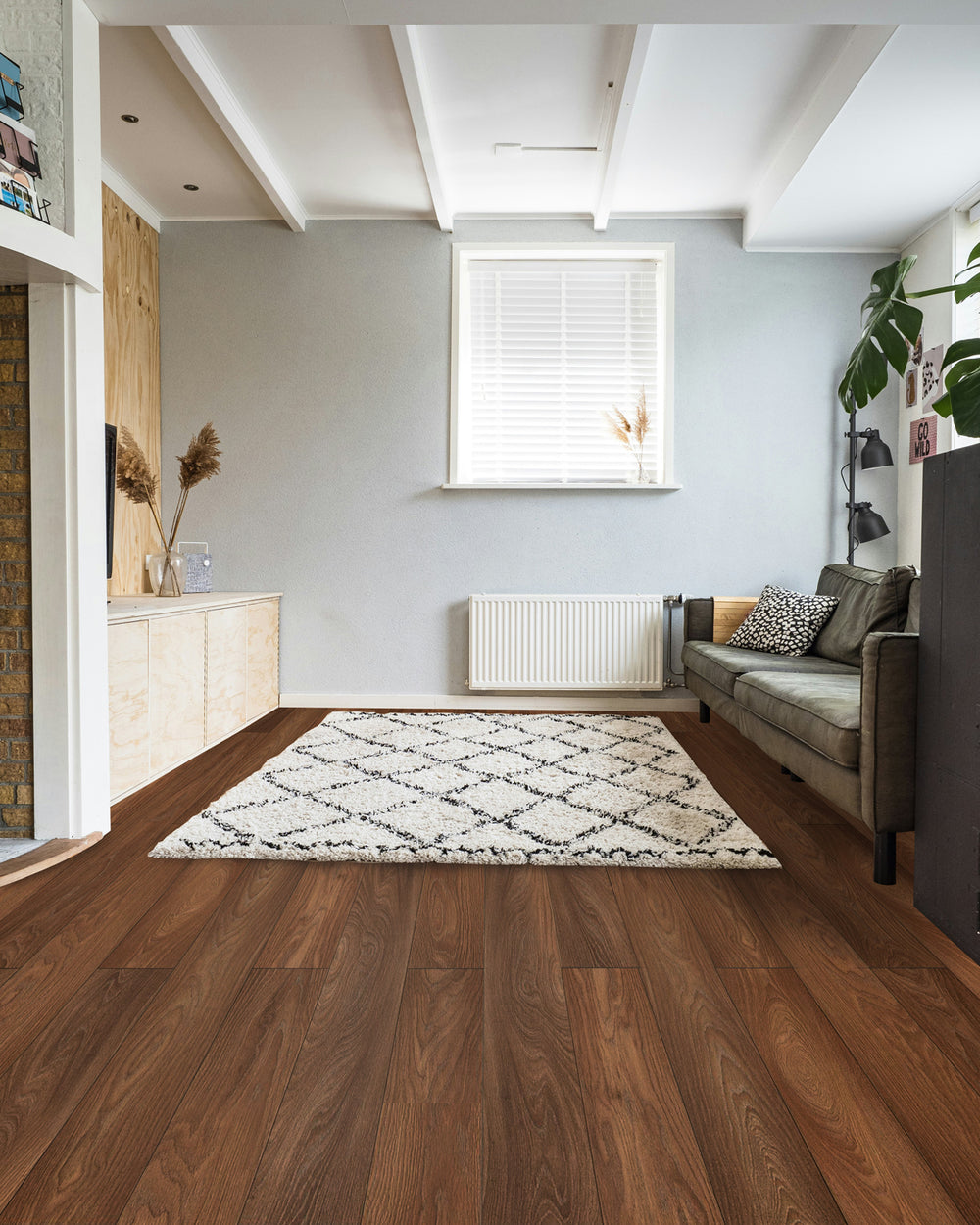
Up close, the surface is matte with a visible, tactile grain that you can see and feel. It doesn't have a shiny or fake look, and even when light hits it, you can still see the wood grain without any glare.
The color is sun-washed oak that reflects more light and helps a room feel more open and airy. This texture suits modern and classic interiors alike.
Peel-and-stick tiles are water-resistant, so splashes and humidity are fine. However, they aren't meant for continuous water. You can also use the table below to decide.
Room |
Suitable? |
Application Tip |
Living room or bedroom |
Yes |
Press every plank firmly for a lasting bond |
Entryway |
Yes |
Wipe wet shoe marks promptly |
Kitchen |
Yes |
Clean spills quickly; avoid sitting water |
Bathroom (outside the shower) |
Yes |
Fine for splashes; keep the floor dry between uses |
Laundry room |
Yes |
Clean up leaks right away |
Shower floor |
No |
Continuous water exposure |
Areas that stay wet |
No |
Moisture can weaken the adhesive |
A few layouts work well in most homes.
Living rooms and bedrooms are where an old floor bothers you most, and where a fresh floor makes the biggest difference.
These get the most foot traffic. So, a light, matte surface looks tidy and wipes clean.
A suitable, smooth surface and careful removal make this a low-stress way to personalize a rental.
Check that the floor is structurally sound. Peel and stick resurfaces a tired floor, but it doesn't repair a damaged one. Next, measure length times width to get the area in square feet.
Colors and textures look different in person than on screen. Order a sample, feel the 1.5mm thickness and check the grain in your room's own light. Then order about 10% to 15% extra to cover cuts and mistakes. With 61 square feet per pack, that usually determines how many packs you need.

A properly prepared floor is what makes tiles stick and last. So this is a very crucial step.
It takes time, but poor prep is the leading cause of lifting corners and bubbles.
Lay a few planks out without peeling them. Then find the center of the room, start from there and work outward. This keeps lines straight and avoids thin sliver lines at the walls.
The installation method is simple, but neatness matters. So follow these steps:
For corners and edges, cut with a utility knife and a straightedge, and check the alignment every few rows.
After setting it up, add trim or baseboard details. Then bring in a rug, adjust warm lighting, and add natural textures. Peel and stick tiles collection pairs well with white walls, green plants and soft fabrics.
Yes, but on a structurally sound floor. It has enough body for normal household use, but it won't feel as firm as a thicker rigid-core plank.
Yes, for splashes and humidity. But keep it out of shower floors and any area that stays mostly wet.
It's designed with a tactile wood grain and has no plastic shine. The best proof is a sample in your own light.
Yes, it just needs a clean and compatible surface.
Test a small, hidden area first. Then go slowly from one corner so you don't damage the floor beneath.
Everyone hits that "my floor looks too old" moment, and fixing it doesn't need demolition or a huge budget. Yipscazo's Desert Oak Peel and Stick Vinyl Wood Floor Tiles are sturdy, easy to cut, resistant to everyday splashes, and designed with a matte wood finish that instantly brightens a room. You just need to prep your base floor well, mind the moisture rules, and grab a sample to see how it looks in your room's natural light.


